|
Sometimes a root canal treatment is necessary to remove the diseased tissue (blood vessels and nerves) from the inside of the tooth When a tooth becomes sensitive or has deep decay, This tissue lies in a canal in the center of the root. During a root canal therapy, an access hole is made in the top of the tooth and small instruments are used to remove this tissue and reshape the often flat, or ribbon-shaped, canal into a more rounded profile.
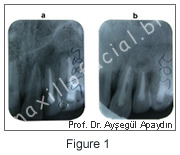
Once this is accomplished, the canal is sealed with a filling material to keep any residual diseased tissue from leaking out into the surrounding bone and causing irritation or infection. So the goal of the root canal is two fold: one, to remove the tissue in the canal, and, two, to seal the canal, especially in the portion near the tip of the root. Gutta Percha has been used to seal the canal. Root canals can fail for any number of reasons but by far the most common is failure of the seal at the tip of the root. However, in reality the canal system is usually somewhat flattened in profile and may contain branches or extra canals which are neither visible nor accessible with traditional techniques. Because of this, it may be impossible for anyone to successfully treat that particular tooth with the traditional root canal techniques. Sometimes an infection begins in the tip of the root (Figure 1). Oral antibiotics are never a satisfactory long term solution either, because the source of infection has not been removed. One solution would be to extract the tooth. The downside of this is that replacing teeth is extremely expensive, often several times the cost of treating the tooth. There is no substitute for a natural tooth. A second option would be to retreat the tooth with the traditional technique. While this is not at all unreasonable there are often some mitigating circumstances. Often the tooth has been restored with a crown. Retreatment necessitates mutilating that restoration by drilling a large hole into the top of the tooth. An additional issue is more of a philosophic one. Most root canals fail, not because of poor treatment, but because of anatomic peculiarities about that particular canal system that make treatment with the traditional technique difficult or impossible. Those peculiarities still are present, however, and because of this retreatment often has a relatively low success rate. The third option is apical surgery (apicoectomy). This involves accessing the tip of the root directly and removing the diseased tissue, then preparing and filling the root tip itself. The downside of apicoectomy is primarily that it requires a surgical procedure to perform and therefore there is a brief postoperative recovery period to negotiate. While many patients prefer to have only a local anesthetic (the administration of numbing medicine to the area being worked on) more often patients choose to be asleep or sedated. By making an incision in the gum tissue overlying the tooth, the surgeon then accesses the tip of the root. The root tip is then cut off and a small preparation or filling is made in the root tip itself and filled with a sealer to prevent further leakage of material out of the tooth. After a brief healing period, the gum tissue returns to normal. Eventually, after several months, the cavity in the bone surrounding the tooth will fill in with new bone completing the healing process. The overall success rate is 80 – 85 % when measured at ten years of time. A ten year success will most likely continue to hold up for the life of the tooth. This is all the more remarkable when one considers that the procedure is typically performed on failing teeth to begin with.
|
 Sometimes a root canal treatment is necessary to remove the diseased tissue (blood vessels and nerves) from the inside of the tooth When a tooth becomes sensitive or has deep decay, This tissue lies in a canal in the center of the root. During a root canal therapy, an access hole is made in the top of the tooth and small instruments are used to remove this tissue and reshape the often flat, or ribbon-shaped, canal into a more rounded profile.
Procedures
 Endodontic Surgery (Apicoectomy)