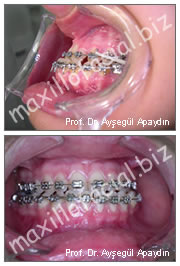
Orthognathic surgery is needed when jaws don't meet correctly and/or teeth don't seem to fit with jaws. Teeth are straightened with orthodontics(Figure 2), and corrective jaw surgery repositions misaligned jaws. This not only improves facial appearance, but also ensures that teeth meet correctly and function properly.
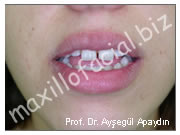
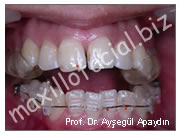
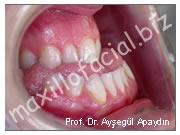
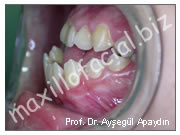
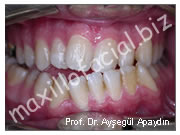
A proper assessment of the patient must be carried out in the first instance. In most cases there is a concern about appearance. People who can benefit from orthognathic surgery include those with an improper bite or jaws that are positioned incorrectly (Figure 3, 4, 5, 6). Jaw growth is a gradual process and, in some instances, the upper and lower jaws may grow at different rates (Figure 7,8,9,10). The result can be a host of problems that can affect chewing function, speech, long-term oral health, and appearance. Injury to the jaw and birth defects can also affect jaw alignment. While orthodontics alone can correct bite problems if only the teeth are involved, orthognathic surgery may be required if the jaws also need repositioning.
Difficulty in the following areas should be evaluated :
Difficulty in chewing, biting or swallowing
Speech problems
Chronic jaw or TMJ pain
Open bite
Protruding jaw
Breathing problems
Obstructive sleep apnea
Receded jaw
Any of these can exist at birth or may be acquired after birth as a result of hereditary or environmental influences or, trauma to the face. Before any treatment begins, a consultation will be held to perform a complete examination with x-rays. The modern computer techniques and three-dimensional models (Figure 11, 12,13) to show exactly how surgery will be approached. Using comprehensive facial X-rays and computer video imaging, this can show how the bite will be improved and even gives an idea of how one will look after surgery. This helps understand the surgical process and the extent of the treatment prescribed, and to see the benefits of orthognathic surgery. (Figure 14,15)




 Orthognathic Surgery