|
There are a number of possible causes of maxillofacial trauma. Motor vehicle accidents, accidental falls, sports injuries, interpersonal violence and work related injuries account for many types of injuries can range from injuries of teeth to extremely severe injuries of the skin and bones of the face (Figure 1). Typically, facial injuries are classified as either soft tissue injuries (skin and gums), bony injuries (fractures), or injuries to special regions (such as the eyes, facial nerves, the salivary glands, muscles, and joints.
.
.
.
Maxillofacial injuries including:
- Facial lacerations
- Intra oral lacerations (Figure 2)
- Avulsed (knocked out) teeth (Figure 6,7)
- Fractured facial bones
(cheek, nose or eye socket)
- Fractured jaws (upper and lower jaw) (Figure 3).
The science and art of treating these injuries requires an understanding of how the treatment provided will influence the patient’s long term function and appearance. It is essential that the occlusion of the teeth be restored to their natural alignment as close as possible.
.
.
.
Bone İnjuries
Fractures of the bones of the face are treated in a manner similar to the fractures in other parts of the body. The specific form of treatment is determined by various factors, which include the location of the fracture, the severity of the fracture, and the age and general health of the patient. When an arm or a leg is fractured, a "cast" is often applied to stabilize the bone and allow for proper healing. Since a cast cannot be placed on the face, other means have been developed to stabilize facial fractures.
One of these options involves wiring the jaws together for certain fractures of the upper and/or lower jaw (Figure 3,4). However, certain other types of fractures of the jaw are best treated and stabilized by the surgical placement of small "plates and screws" at the involved site(Figure 5). This technique of treatment can often allow for healing and may diminish the necessity of having the jaws wired together (Figure 3, 4). This technique is called "rigid fixation" of a fracture. The relatively recent development and use of "rigid fixation" has profoundly improved the recovery period for many patients by allowing them to return to normal function more quickly.
The treatment of facial fractures should be accomplished in a thorough and predictable manner. Importantly, the patient’s facial appearance should be minimally affected. An attempt at accessing the facial bones through the fewest incisions necessary is always made. At the same time, any incisions that were necessary are designed to be small and, whenever possible, are placed so that the resultant scar is "hidden".protezi ile kapatılabilir.
|
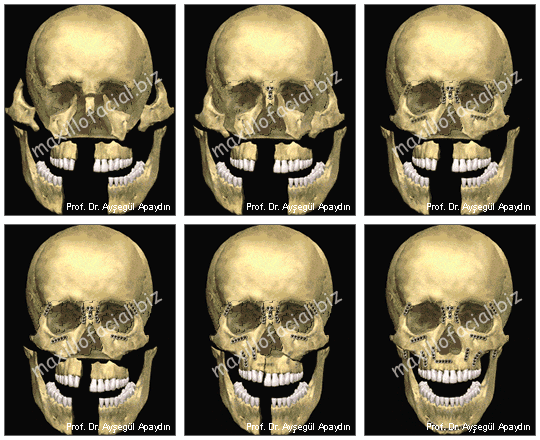
Figure 1
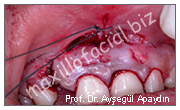
Figure 2
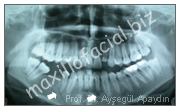
Figure 3
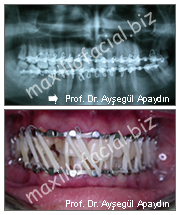
Figure 4
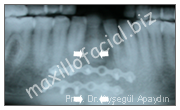
Figure 5

Figure 6
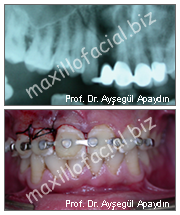
Figure 7
|
|
 Maxillofacial Trauma